
It's my birthday!
My 'origin story' and my journey as an author


This week is my birthday, which now serves as a reminder of mortality rather than a commemoration of birth. I thought I’d share some highlights of my past, so you can see how it might find its way into my novels and short stories.
My brother once dared me to cut one side of my long hair. I did it, and my mother cried when she saw one side long and the other shorn short. The result was what was known in the sixties as a “pixie cut”. Kind of cute, wasn’t it? Speaking of hair, I was born with a blond streak which you can clearly see in this picture of me at age 7. I used to get teased that I dyed my hair which I didn’t. Now, the blond streak was the first of my hair to turn grey.
At 16, I was obsessed with old movies, and embroidered my jeans with the likenesses of Errol Flynn, Greta Garbo, and Bela Lugosi. My mother, who wrote a column for the Rockland Journal News, wrote an article about me and my crafting.
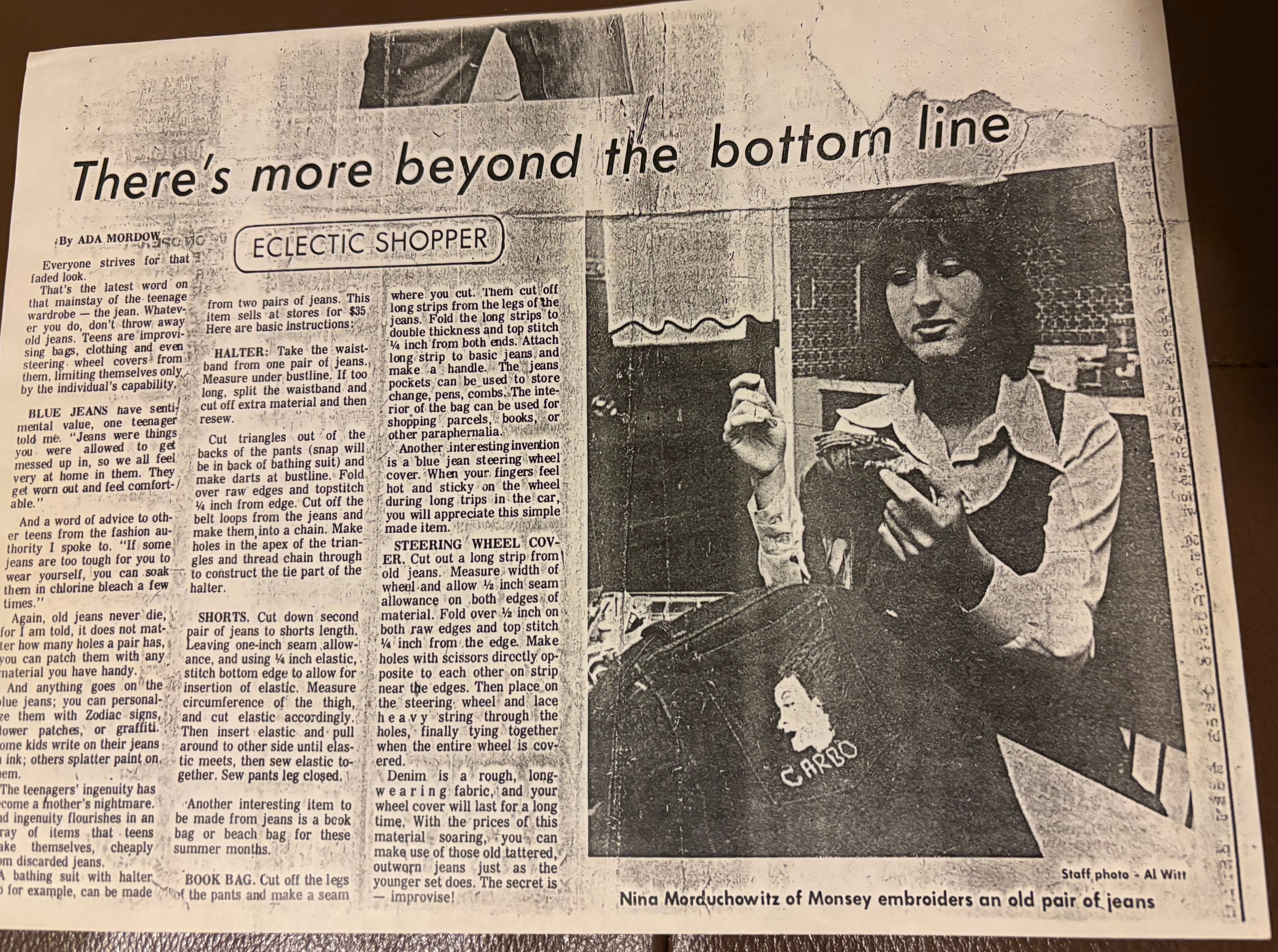
I was too bored in high school, so I decided to skip my senior year, and went early admissions to Parsons School of Design, where I studied Book Illustration with Maurice Sendak. After I graduated, I was offered $250 for an entire book of 36 illustrations, so I decided to work in advertising instead. I became an art director on P & G brands like Crest toothpaste and Pampers, at Benton & Bowles, which was like the ad agency in Mad Men.
One of my highlights of working on Pampers was hiring Edward Sorel to illustrate a Pampers ad (which never ran), and my fairy tale booklet about a new absorbent diaper, “The Wizard of Diaperdom.” which was distributed in Pediatrician offices.
Those were the days.
All during my career in advertising, I subscribed to The Writer magazine, hoarding every issue, and promising myself that one day I’d write the kind of novels I liked to read. A trip to Venice and the Ghetto, where my mother’s family lived from the Renaissance to the 1990s, led me to read the autobiography of the 17th Century rabbi Leone di Modena, which inspired me, so I chose Venice as the setting for my novel.
I wanted to use Rabbi Modena as my lead character, a flawed man who was a scholar, orator, playwright, poet and community leader and a compulsive gambler. In his autobiography, he laments over his gambling habit and his errant children. His sons caused him grief, since one went to sea and became a corsair and the other ended up being murdered by thugs in Venice.
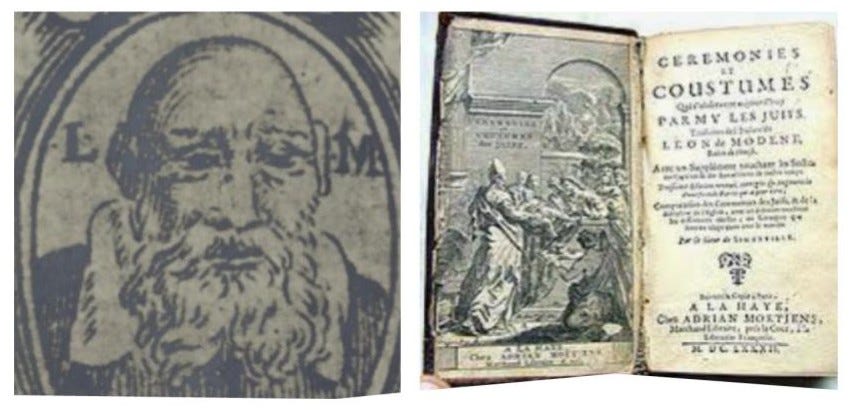
Only his daughter Diana survived him, and I could relate to her better as my protagonist:like Diana, I am the daughter of a rabbi, and my uncles were all prominent rabbis. However, like Rabbi Modena, who moved freely in the secular world, my father was a scientist who worked for Texaco. Like Diana, I was entranced by art and wanted to learn more about it, which is why I begged my parents to let me go to art school.
I needed a hook, a triggering event to start my novel. On a trip to Munich, I found it. The Gallery of Beauties of King Ludwig 1 at Nymphenborg Palace. Ludwig had ordered his court painters to paint the portraits of the most beautiful women of Munich— from all walks of life. The portrait of the toymaker’s daughter, who Ludwig saw when she was delivering toys to the palace for his grandchildren hangs alongside the portraits of princesses and even the notorious adventuress, Lola Montez.


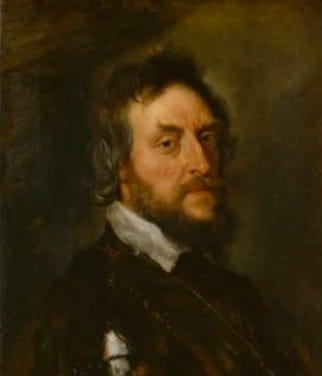
Putting the Gallery of Beauties together with Venice was not difficult. Venice was always know for its beautiful women, and so the idea that an English lord, on his Grand Tour, would commission a portrait gallery of the most beautiful women of Venice was highly plausible. I found the portrait of an English nobleman, Thomas Howard, Lord Arundel, in the National Portrait Gallery in London. He had traveled to Italy on his Grand Tour, to purchase works of art, and was known as “The Collector”, and I cast him in the same role in my novel.
The selection of the beautiful women from all walks of life, gave the chief rabbi’s daughter, Diana, the means to escape from the Ghetto to learn about art as her portrait was painted. Sound familiar?
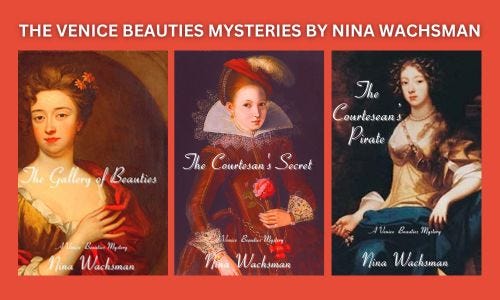
As Renaissance Venice was also the capital of poison, I couldn’t help turning my debut novel, The Gallery of Beauties into a dark murder-mystery. One by one, the subjects of the portrait gallery are poisoned with Belladonna, a former elite courtesan of Venice, partnering with the rabbi’s scholarly daughter solving the mystery and unmasking the murderer.
The two reunite in the next two books in the series, The Courtesan’s Secret, and the The Courtesan’s Pirate. I am working on book 4, The Courtesan’s Memoir, inspired by the secret beauty books of elite courtesans of Venice, and is due to be published in 2027.
I hope you’ve gotten a better understanding of who I am and how my series came to be. As you might have guessed, I love the research part of writing historical novels, and you can rely on my newsletters to bring you other surprise findings about Venice or interesting discussions about art.
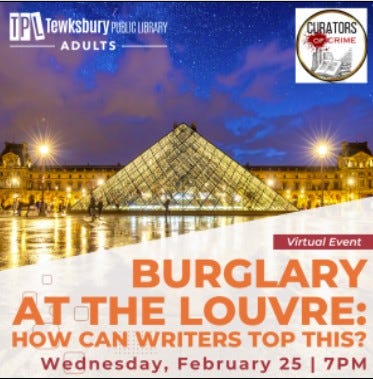
In fact, you can join me and my fellow authors of Curators of Crime at our upcoming book talk with the Tewksbury library about our perspectives on the Louvre heist — and what can mystery writers take away from it for our stories. You can register for the event on Wednesday, February 26 at 7pm (ET) here.
Until next time!
Nina Wachsman
Happy birthday Nina!
What a fascinating origin story!!
Michelle